Why add a wine recommendation in an AI newsletter?
Almost everyone on our team loves wine.
Nobody was hired specifically because of it, of course. We discovered it serendipitously, around a table, the way you discover many things that turn out to matter. Wine embodies many of the traits we value at Gradient, and stands in gentle opposition to much of what artificial intelligence has come to represent.
Making wine together is one of the oldest traditions humans have, with archaeologists tracing the first wineries back to Georgia almost 8,000 years ago, in the Neolithic period. Across that time, it has become a bedrock of human gathering, inviting us to drink slowly, at a table, with people whose conversation and company we value.
Nothing about wine is improved by haste. You cannot rush a vintage: the grapes ripen when they ripen, and the fermentation takes as long as it takes (and not a day more). A bottle is, as one of the sommeliers in The Bear puts it, a snapshot of time and place: the temperature, rainfall and sunlight over the course of a season, interacting with the soil and slope of the land to produce a specific sense of terroir. The same grape, planted in two valleys, produces two different wines. So do the same grapes on the same land in successive years. No cleverness in the cellar can undo that.
The most admired wines often come from producers who could have chosen the easier path and intentionally didn't. They accept lower yields and slower returns because they care about producing something that is a true expression of the land, rather than something scalable and cheap. Vignerons build these practices over decades, drawing on a lineage of family and friends who have been doing the same for generations.
In this way, wine is "care in a bottle". It is the product of an incredible amount of attention, patience and love for the work — all amounting to something that, when done right, tastes magical and brings us closer together.
The result is something startlingly specific to the time, place and craftsmanship that went into it. This specificity matters to us. It is the opposite of the generic, flat, and impersonal output that increasingly fills our screens and our world.
Like many good things in life, wine must be enjoyed in moderation and approached consciously, because too much indulgence risks harm. This too parallels how we believe AI should be approached: intentionally, responsibly, and in a way that preserves our own human agency. Wine, though, is transparent about its risks. Everyone knows the danger is built in, and that shared knowledge teaches us that our relationship with wine demands care and discernment. AI offers no such warning, and the same care is needed, only now unprompted.
To enjoy wine well is to practise close attention — letting your mind observe and savour the elements producing a taste that only you will taste, in that particular moment. It invites us to be present, and to engage with what is real.
With all of that in mind, as a small antidote to our AI-focused newsletter, each month we will recommend a wine that someone on our team has recently enjoyed.
Just as wine is care in a bottle, we hope this newsletter can be a drop of care in your inbox.
In vino veritas.
Subscribe to Gradient Briefs at https://briefs.gradientinstitute.org/
About the authors
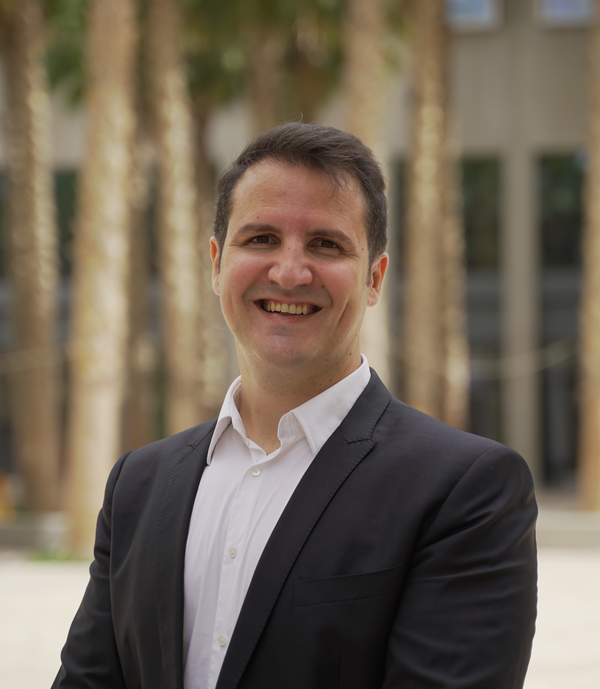
Alberto Chierici
As Gradient’s Principal AI Specialist, Alberto Chierici translates dense AI research into plain English. He also acts as a guide for founders who build with care, helping them navigate the complexities of scaling in the AI era. Despite holding a PhD in Computer Science, he'd much rather brag about his WSET Level 2 Award in Wines. If you want to get on his good side, pour him a glass of his favorite Australian discovery: the 2014 Poonawatta "The 1880" Shiraz.
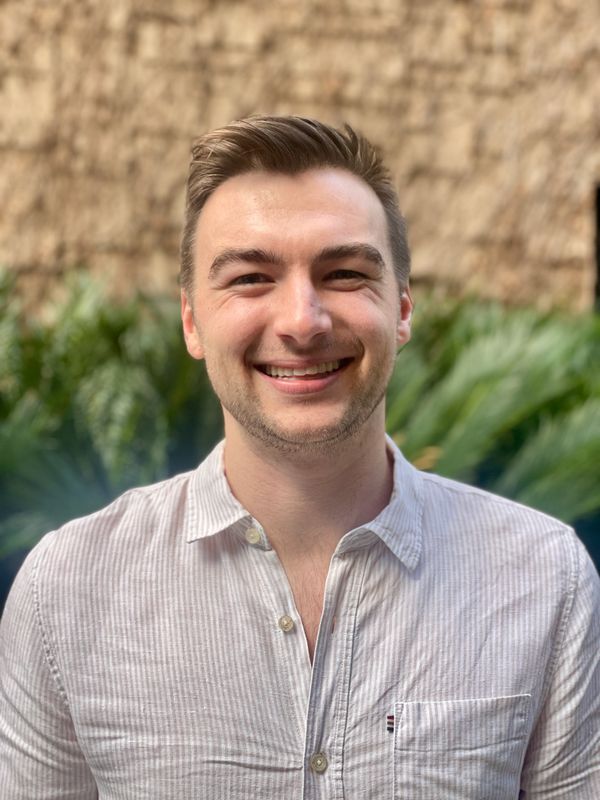
Liam Carrol
As an AI Safety Researcher at Gradient, Liam Carroll uses his background in mathematics and learning theory to understand the behaviour of AI systems, and translate these insights into practical guidance. He is also a gatherer of people, facilitating events and discussions to collectively find meaning in our current AI moment, shaped by his past life as a guide in the Tasmanian wilderness. When he isn't thinking about AI, he can be found at gigs or on top of mountains, preferably with a glass of Timo Mayer Syrah nearby.